ICRISAT Strengthens Global Capacity on Digital Sequence Information to Support Future-Ready Genebanks
Five-day hands-on training equips scientists from Asia and Africa with practical genomics skills to improve the use of germplasm for breeding and food security.

As genomics increasingly shapes modern agriculture, Digital Sequence Information (DSI), the digital data derived from a plant’s DNA, has become a powerful tool for improving how crop genetic resources are accessed and used, particularly in plant breeding programs for developing better crop varieties.
However, the rapid growth of genomic data has outpaced the capacity of many national research systems, especially in developing countries, to apply these tools effectively and responsibly.
To help close this gap, the International Crops Research Institute for the Semi-Arid Tropics (ICRISAT), in collaboration with AfricaRice and Alliance of Bioversity International and CIAT, organized a five-day hands-on DSI training workshop from 8–12 December 2025 at ICRISAT Headquarters in Hyderabad, India.
As part of a broader capacity-building series under the CGIAR Genebanks Accelerator, the program strengthened the technical and institutional capacity of 18 scientists from 12 countries across Asia and Africa. It provided hands-on training in handling and analyzing Digital Sequence Information (DSI) and integrating genomic data into genebank databases.

Dr Stanford Blade, Deputy Director General – Research & Innovation of ICRISAT, said the workshop would transfer knowledge and skills drawn from ICRISAT’s long-standing expertise in genebank management and the use of genomics in breeding.
“As a signatory to the International Treaty on Plant Genetic Resources for Food and Agriculture (ITPGRFA), ICRISAT continues to promote the effective use of plant genetic resources through training programs, strengthening human capacity to translate scientific advances into tangible gains for food and nutrition security.” Dr Blade added.

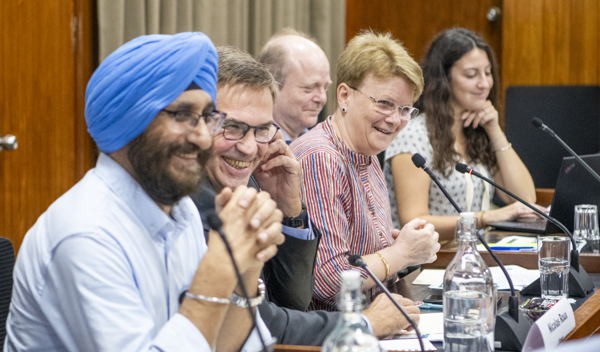
Emphasizing the need for stronger coordination among genebanks, Dr Marie-Noelle Ndjiondjop, Head, Monty Jones Rice Biodiversity Center for Africa, and Interim Lead, AoW5, CGIAR Genebank Accelerator, said these training programs are vital to bring national and global research systems onto a common platform and improve coordination in the use of genomic tools across genebanks.
“By building shared capacity across regions and institutions, the training enhances the application of genomic data and supports more informed decisions in breeding programs,” she added.
Building on Dr Ndjiondjop’s guidance, participants agreed to develop a shared training agenda and establish regular interactions, committing to setup regional Communities of Practice (CoP) in Asia and Africa for sustained peer learning.
Experts from ICRISAT and partner institutions led lectures, discussions, and hands-on training, with participants applying their skills in laboratory sessions covering the full workflow from DNA extraction to high-throughput genotyping and SNP data analysis, using ICRISAT’s state-of-the-art facilities.


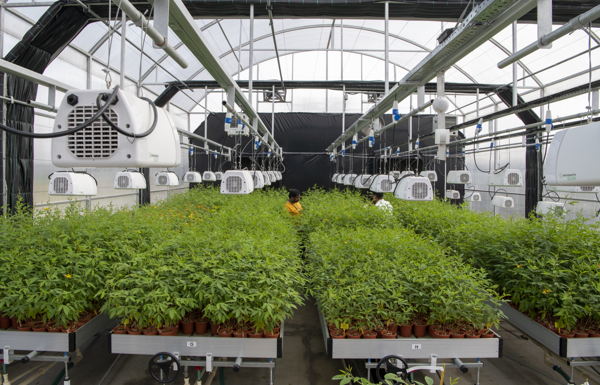
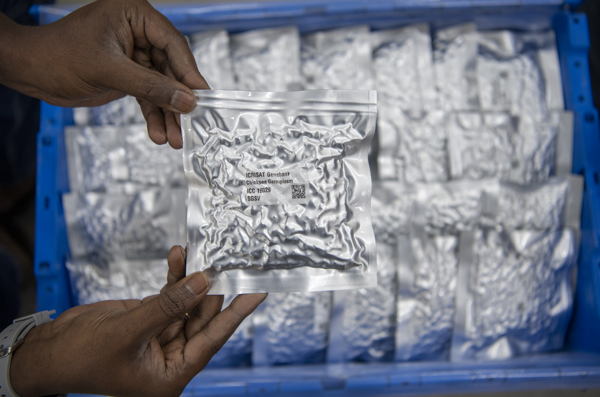
Participants also toured key ICRISAT facilities, including the Genebank, Speed Breeding Facility, Plant Quarantine Laboratory, Climate Change Biology Facility, and Aflatoxin Laboratory, gaining insights into how advanced research and breeding tools support the crop improvement pipeline – from germplasm conservation to farmer-ready varieties.
Reflecting on the outcomes, Dr Kuldeep Singh, Acting Global Research Program Director for Accelerated Crop Improvement and Head – Genebank, ICRISAT, emphasized that the workshop fostered sustained regional collaboration, strengthening countries’ long-term capacity to manage and utilize genetic resources.
.jpg)
At the conclusion of the program, two National Agricultural Research Systems (NARS) Champions, Dr Jean Sangare from the Institut d’Economie Rurale, Mali, and Dr Puneet GM from the Indian Institute of Agricultural Research, India, were identified to co-lead the CoP, strengthening regional ownership and long-term impact.
Explaining the practical value of the training, Dr Damaris Odeny, Principal Scientist – Genomics, Pre-Breeding and Bioinformatics, ICRISAT, said that DSI allows breeders to identify useful traits without repeatedly accessing physical samples, reducing costs and time while accelerating breeding decisions so that benefits reach breeding programs and, ultimately, farmers efficiently.

At the valedictory ceremony, Dr Hari Upadhyaya, a distinguished agricultural scientist and former Head of the Genebank at ICRISAT, underscored the ethical foundations of scientific research, emphasizing that meaningful science must be guided by honesty, integrity, and the courage to uphold one’s convictions.


Roseleen Aind
Related Articles: