ICRISAT and ITEC Advance Agri-Entrepreneurship Capacity in the Global South Through Strategic Innovation Management Program
34 professionals from 21 nations undergo intensive training to accelerate entrepreneurship and food system resilience

Global investment in agrifood innovation reached USD 16 billion in 2024, reflecting the urgent push to modernize food systems.
Yet fewer than 5% of agrifood startups originate from low- and middle-income countries, despite these regions producing one-third of the world’s food and being home to most smallholders.
This gap underscores the global need to strengthen capacities in agri-preneurship, innovation management, and scalable agri-business models.
In response, ICRISAT, in collaboration with India’s ITEC program under the Ministry of External Affairs, recently delivered a training program designed to accelerate agrifood innovation across emerging economies.
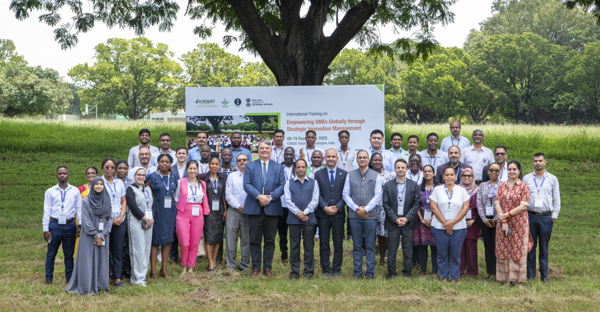
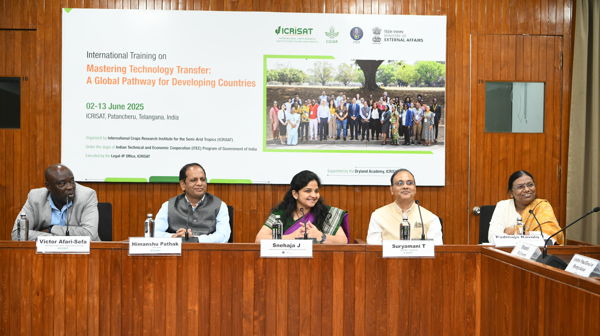
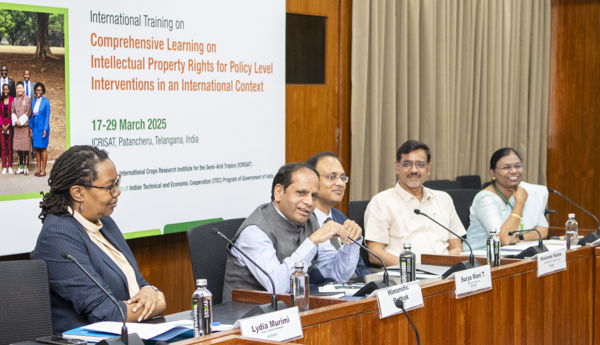
The two-week intensive program, “Fostering Innovation and Entrepreneurship in Agriculture for Sustainable Development,” held from 17–28 November 2025, convened 34 participants from 21 countries across Asia, Africa, Latin America, and the Pacific, representing expertise in agricultural research, extension, development, policy, and agribusiness.

Reinforcing the importance of capacity-building, Dr Himanshu Pathak, Director General of ICRISAT, noted that the future of global agriculture depends on empowering professionals with the skills to innovate, lead, and foster cross-border collaboration in sustainable agri-food systems.
“This program demonstrates ICRISAT’s commitment to fostering South–South collaboration by developing skilled leaders capable of advancing climate-resilient, nutrition-sensitive, and sustainable agrifood systems across the Global South,” said Dr Pathak.
The course featured 23 expert sessions delivered by 16 industry leaders and seven ICRISAT scientists, offering insights across the agrifood value chain.
Senior representatives from Zepto, ITC Limited, Yara International, AgHub, NutriHub–IIMR, DeHaat, MANAGE, World Vegetable Center, DCM Shriram, Heifer International, HarvestPlus, Inera Crop Science, Caspian Pvt Ltd, and the MSME sector mentored projects and participated in panels connecting innovation with investment, commercialization, and farmer engagement.

Reflecting on the transformative potential of agricultural entrepreneurship, Mr Shyam Sundar Singh, Co-Founder of DeHaat, said that the success of agri-startups depends on solutions that empower farmers, improve market access, and enhance livelihoods.
“Equipping professionals with practical skills strengthens startups’ ability to deliver scalable, impact-oriented solutions across diverse agricultural systems,” said Mr Singh.

Addressing the need for effective business models, Mr Srinivas Swain, Head – Fresh Business, Zepto, observed that startups must adopt flexible, scalable approaches that connect directly with end-users.
“Startups that understand local contexts, leverage technology, and build efficient delivery networks are best positioned to reach the last mile,” said Mr Swain.
Exposure visits to ICRISAT facilities and national innovation hubs, including MANAGE, NutriHub, AgHub, NAARM, and Ni-MSME, gave participants firsthand experience of how research, entrepreneurship, and industry converge to create market-ready, impact-oriented agritech solutions.


Ms Divya Devarajan, IAS, CEO of SERP, Government of Telangana, commended the participants for their enthusiasm and commitment, noting that their practical learning and innovative ideas will significantly contribute not just to national progress but to global food security.
Dr Dinesh Chauhan, Course Director and CEO of the Agribusiness Innovation Platform (AIP) at ICRISAT, highlighted that the program equipped participants with sharpened entrepreneurial skills, enhanced capabilities in agribusiness project development, a clear understanding of sustainable value chain strategies, country-specific action plans, and strengthened global networks to advance collaborative agricultural innovation.


This work aligns with SDG 17

Roseleen Aind
Related Articles: