ICRISAT Unveils High-Resolution Irrigated–Rainfed Cropland Map to Strengthen National Policy Decisions

Agriculture in India is defined by a simple but decisive divide: irrigated and rainfed. This divide shapes cropping patterns, water use, yields, drought vulnerability and more. Yet most national agricultural datasets available to decision-makers are too coarse to show what is happening at the field level.
As a result, planners, researchers and agencies often work without a clear picture of where irrigation sustains production and where farmers remain exposed to rainfall variability.
With climate extremes intensifying and water demand rising, there is a pressing need for a high-resolution, reliable map that captures irrigation dependence across the country with real spatial detail.
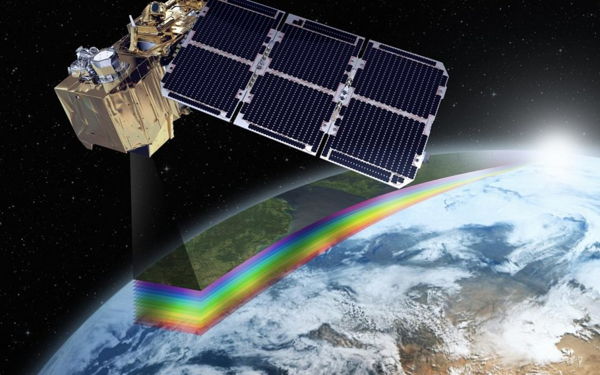
To address this gap, a team of researchers at ICRISAT has produced a 10-meter irrigated and rainfed cropland map of India for 2024–25, using dense Sentinel-2 time-series data, field observations and seasonal behaviour analysis.
Previous to this development, the team published multiple agricultural cropland products of South Asia using Landsat-8 (30m) and MODIS (250m) data.
“As India is making steady progress towards sustainable water use under the schemes such as the National Water Mission and More Crop Per Drop, water budgeting for agriculture is imminent.
This map is a valuable resource for decision-makers and for guiding policy interventions,” said Dr Himanshu Pathak, Director General, ICRISAT.
The dataset achieves around 90% accuracy in mapping cropland and nearly 70% accuracy in distinguishing irrigated from rainfed systems.
Its high level of detail reveals true field boundaries, mixed management and transitions that are not visible in coarser national data layers.
“As an international not-for-profit organization, we at ICRISAT anticipate this dataset will empower decision-makers at every level, from village panchayats to central government agencies, to better understand India’s semi-arid and irrigated landscapes and design targeted strategies for improving water-use efficiency,” said Dr Stanford Blade, Deputy Director General–Research & Innovation, ICRISAT.
These maps are accessible through a simple, user-friendly Google Earth Engine application that allows users to view the map at district level, explore class-wise statistics and interact with the data without needing specialized processing skills.

“The dataset offers a sharper foundation for water budgeting, drought and risk monitoring, crop planning and yield modelling.
It provides agencies and researchers with a consistent baseline to track shifts in irrigated areas, identify vulnerable rainfed pockets and design interventions that reflect on-ground realities,” said Dr Muralikrishna Gumma, Principal Scientist - Geospatial and Big Data Sciences, ICRISAT
The new map delivers a clear, high-resolution picture of India’s agricultural water dependence, paired with an accessible tool that makes this information easier to use for planning, research and operational decision-making.


This work aligns with SDGs 13, 17,15 and 12.
For media inquiries, please contact:

Parkavi Kumar
Related Articles