ICRISAT-ITEC Trainees Explore Technology Transfer Models and India’s Innovation Ecosystem
.jpg)
Strong institutional capacity for technology transfer is essential to accelerating innovation-led development.
Held under the aegis of the Indian Technical and Economic Cooperation (ITEC) Program of the Ministry of External Affairs, Government of India, the ICRISAT Center of Excellence for South-South Cooperation (ISSCA), with the support of ICRISAT's Dryland Academy, conducted the international training program Mastering Technology Transfer: A Global Pathway for Developing Countries from 27 July to 8 August 2026.
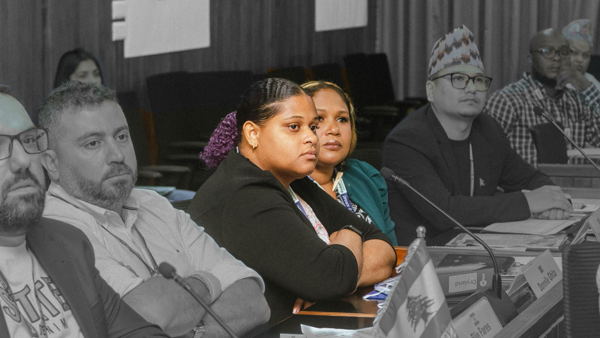
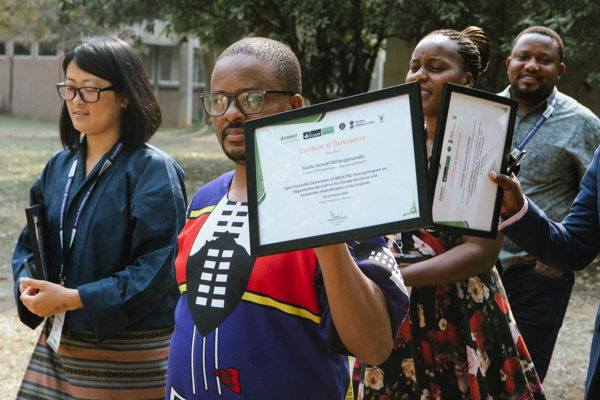
The training brought together 44 professionals from 20 countries, representing research organizations, universities, government departments, extension systems, innovation support organizations, technology transfer offices and development institutions, reflecting the multidisciplinary nature of technology transfer.
“Building strong technology transfer capacity is essential for countries seeking to derive greater value from their investments in research and innovation. ICRISAT is pleased to provide a platform where professionals from across the Global South can strengthen these capabilities while learning from India’s evolving innovation ecosystem,” said Dr Himanshu Pathak, Director General, ICRISAT.
![[L-R] Dr Suryamani Tripathi, Global Head - Legal Services, ICRISAT; Mr Sanjay Agarwal, Assistant Director General, ICRISAT; Dr Satya Prakash Dash, Chief Executive Officer, IKP Knowledge Park; Dr Himanshu Pathak, Director General, ICRISAT; Dr Stanford Blade, Deputy Director General – Research and Innovation, ICRISAT; and Dr Padmaja Ravula, Principal Scientist - Sociologist, Gender and Nutrition Research, ICRISAT.](https://cdn.assets.prezly.com/5a5403bc-1b4b-4a4d-b6bc-91a7520ea6ac/-/crop/8168x3735/0,85/-/preview/-/preview/-/format/auto/ICP_1039.jpg "[L-R] Dr Suryamani Tripathi, Global Head - Legal Services, ICRISAT; Mr Sanjay Agarwal, Assistant Director General, ICRISAT; Dr Satya Prakash Dash, Chief Executive Officer, IKP Knowledge Park; Dr Himanshu Pathak, Director General, ICRISAT; Dr Stanford Blade, Deputy Director General – Research and Innovation, ICRISAT; and Dr Padmaja Ravula, Principal Scientist - Sociologist, Gender and Nutrition Research, ICRISAT.")
“The real measure of a capacity-building program is what participants take forward to their institutions. Combining technical knowledge with practical tools and diverse models, this program encourages approaches that can be adapted to national innovation systems,” said Dr Stanford Blade, Deputy Director General – Research and Innovation, ICRISAT.
The course delved into the topics of technology transfer models, innovation ecosystems, partnerships, funding, South-South collaboration, intellectual property management, technology valuation, licensing and commercialization.
Experts from CGIAR including the International Food Policy Research Institute (IFPRI), Biotechnology Industry Research Assistance Council (BIRAC), AgriInnovate India, the Indian Council of Agricultural Research (ICAR), IKP Knowledge Park, universities, legal experts and technology commercialization organizations shared practical experiences and case studies.
Experiential learning included visits to ICRISAT laboratories and field platforms, the ICAR-Indian Institute of Millets Research (IIMR) and BITS Pilani, Hyderabad Campus. Hands-on activities such as collaboration canvas workshops, and licensing negotiation exercises helped participants to explore the practical side of Technology Transfer. A Powerwalk activity encouraged participants to apply technology transfer concepts and examine them through a Gender Equality and Social Inclusion (GESI) lens.


At the valedictory session of the course, Dr Satya Prakash Dash, Chief Executive Officer of IKP Knowledge Park, said, “Successful commercialization depends on connecting promising technologies with the right ecosystem of expertise, capital, infrastructure and market pathways. Exposure to these connections is particularly valuable for professionals working to strengthen technology transfer systems in developing countries.”
Course coordinators Dr Suryamani Tripathi, Global Head - Legal Services, and Dr Padmaja Ravula, Principal Scientist - Sociologist, Gender and Nutrition Research, further emphasized the program’s focus on translating knowledge into action. With guidance from ISSCA, participants are now developing technology transfer action plans for scalable agricultural solutions from the ISSCA repository, tailored to their countries’ needs and opportunities.
Ms Phoebe Murunga, Meteorologist, Ministry of Environment, Climate Change and Forestry, Kenya, said, “The course helped me see technology transfer as a complete pathway, from identifying an innovation to protecting, valuing and taking it to scale.”
The international cohort also created opportunities for participants to learn from one another and explore areas for collaboration. Mr Suprio Ghosh, Senior Scientific Officer, Bangladesh Agricultural Research Institute, Bangladesh, said, “Learning alongside professionals from 20 countries showed me how much we can gain by sharing solutions, experiences and approaches across the Global South.”
View the Video
About ISSCA: Established at ICRISAT in 2025, the platform translates decades of agricultural research into scalable, context-appropriate solutions while enabling the exchange and scaling of innovations across countries in the Global South with shared climatic, agricultural, and socio-economic challenges.
About ITEC: Launched in 1964, the Indian Technical and Economic Cooperation (ITEC) Program is a premier, fully funded capacity-building initiative of the Government of India. It fosters South-South cooperation by offering training, technical assistance, and consultancy to 160 partner countries across Asia, Africa and Latin America.


Roseleen Aind
Related Articles: