Can Crops Grow with Less Fertilizer without Losing Yield? ICRISAT’s Trailblazing Research Says, "Yes"
Unlocking sorghum’s genetic code, ICRISAT identifies key genes that enable strong yields with reduced nitrogen inputs, lowering costs and environmental impact

The ICRISAT-led study on Sorghum provides new genetic insights into how crops can maintain productivity with significantly lower nitrogen inputs, offering a transformative solution to one of global agriculture’s most pressing challenges: sustaining high food production while reducing the environmental and financial costs of synthetic fertilizers.
Published in the Food and Energy Security Journal, it provides new evidence that part of the solution lies within the crop itself, identifying key genes and genetic mechanisms that regulate nitrogen use efficiency (NUE), a critical trait that determines how effectively plants absorb, utilize, and convert nitrogen into yield.
Nitrogen fertilizers remain one of the highest costs in agriculture yet crops typically use only 30–40% of what is applied. The rest is lost to the environment, contributing to soil and water degradation while increasing financial pressure on farmers. Improving NUE is therefore central to reducing fertilizer dependence while maintaining yields.
“We are entering a phase where agriculture must produce more with fewer resources. This research demonstrates that the answer lies not only in inputs, but in smarter crops.
“By improving how plants use nitrogen, we can transform both productivity and sustainability at scale,” said Dr Himanshu Pathak, Director General of ICRISAT.
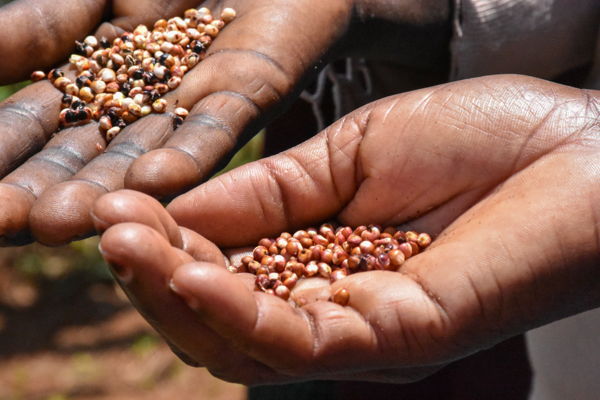
To address this, ICRISAT scientists evaluated 186 diverse sorghum accessions from the ICRISAT Genebank under three nitrogen regimes – 0%, 50%, and 100% of the recommended application – across two growing seasons. The findings revealed that grain yields under 50% nitrogen were comparable to those under full application, highlighting the crop’s potential to sustain productivity with reduced inputs.

To understand the genetic basis of this efficiency, the researchers combined genome-wide association studies with RNA sequencing, linking field performance directly to gene activity inside the plant.
“The real innovation here is the integration of multiple layers of data that allows us to move from identifying traits to pinpointing the exact genes that control them under different nitrogen conditions.
“This level of precision is critical for developing crop varieties that can deliver stable yields with fewer inputs, providing an innovative pathway toward the goal of sustainable intensification of cropping systems,” said Dr Stanford Blade, Deputy Director General – Research and Innovation at ICRISAT.
By analyzing genomic data from 186 diverse sorghum accessions evaluated under varying nitrogen conditions, the study identified 1,369 genomic regions associated with nitrogen use efficiency.
By integrating genomic and transcriptomic data, the researchers discovered 10 key candidate genes that regulate how sorghum absorbs, transports, and utilizes nitrogen.
“These findings provide precise genetic entry points for crop improvement. With clear targets, we can develop nitrogen-efficient sorghum varieties through modern breeding and gene-editing.
“Ultimately, it will enable farmers to sustain yields while reducing their dependence on costly nitrogen fertilizers,” said Dr Raman Babu, Global Research Program Director – Accelerating Crop Improvement at ICRISAT.
Why this matters:
- Lower fertilizer costs: Farmers could maintain yields with significantly reduced nitrogen inputs
- Higher efficiency: Similar yields achieved at 50% nitrogen application in field trials
- Reduced environmental losses: Less nitrogen leaching, runoff, and emissions
- Actionable breeding pathways: Clear genetic targets for the development of nitrogen-efficient varieties
- Cross-crop potential: Insights can be applied to major cereals such as rice, wheat, and maize
Dr Rakesh Srivastava, Principal Scientist and Global Chickpea Breeding Lead at ICRISAT and corresponding author of the study, emphasized that this research is highly relevant to the current global fertilizer crisis, as it uncovers key genes that act as master regulators of nitrogen metabolism. These insights provide a robust foundation for developing improved nitrogen-efficient varieties, with potential applications across major cereals and strong relevance for enhancing resilience in low-input farming systems.

About CINTRIN
CINTRIN stands for the Cambridge-India Network for Translational Research in Nitrogen (CINTRIN), a UK–India research consortium focused on improving nitrogen use efficiency in staple crops to reduce fertilizer pollution and support sustainable yield gains.
Led by ICRISAT, the consortium brings together partners including the University of Cambridge, the National Institute of Agricultural Botany, Sainsbury Laboratory, ADAS UK Ltd, KisanHub, Punjab Agricultural University, and National Institute of Plant Genome Research.


This work aligns with SDGs 1, 2, 3, 13 and 17

Roseleen Aind
Related Articles: